
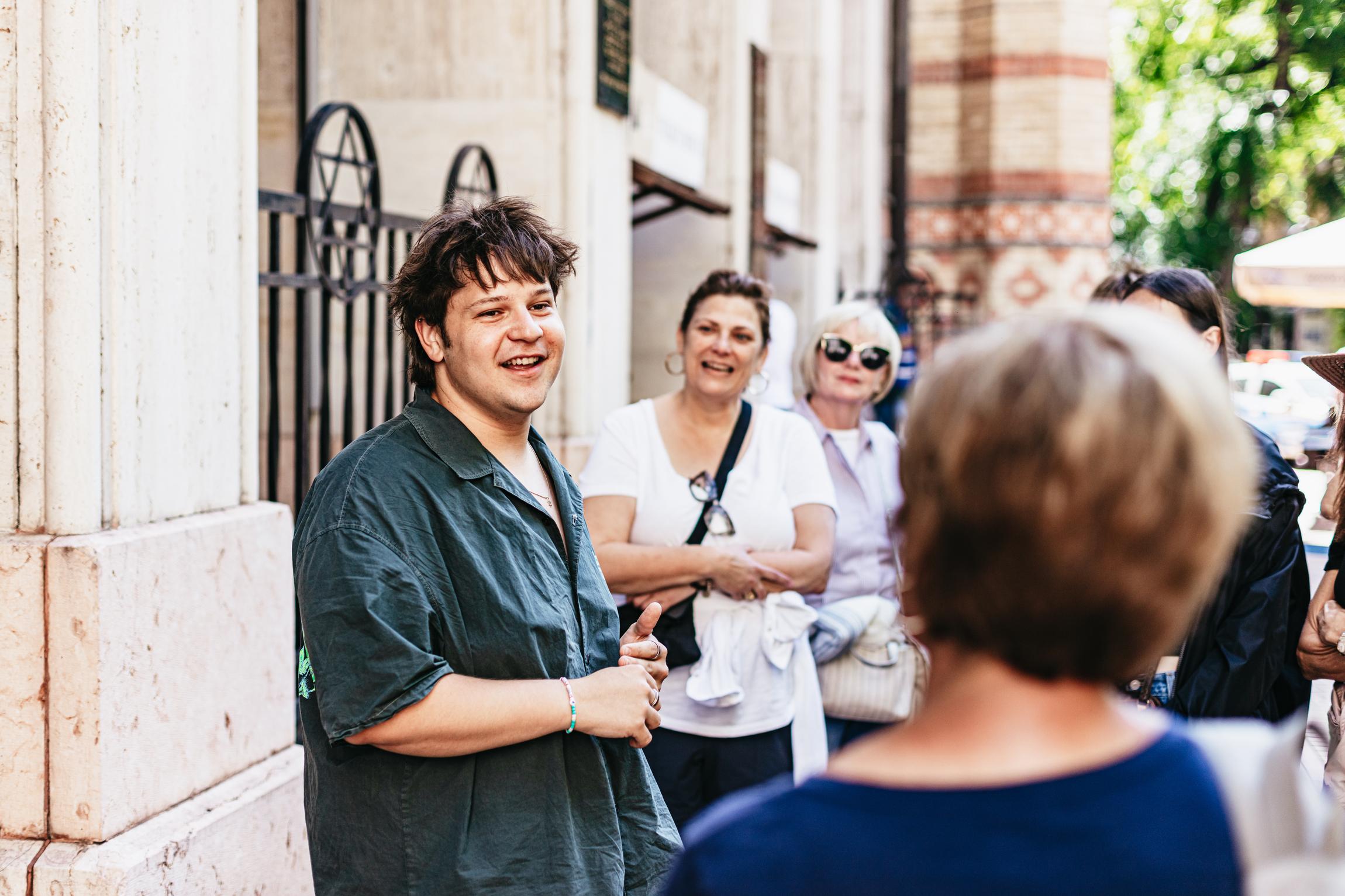
4 hr
Jewish Heritage Walking Tour with Synagogue & Museum Entry
Discover Budapest's Jewish Quarter through guided visits to Europe's largest synagogue and historic landmarks
Reserve
Hand-picked by our editors — only the best 5 experiences from 12 reviewed.
Verified partners for every tour, free cancellation where available, and instant confirmation on every booking.
4 hr
Discover Budapest's Jewish Quarter through guided visits to Europe's largest synagogue and historic landmarks
Reserve
1 hr 30 min
Trace centuries of Jewish life through courtyards, synagogues, and street art in Budapest's evolving quarter
Reserve
2 hr 30 min
Discover Budapest's historic Jewish Quarter with visits to three synagogues and World War II memorials
ReservePrices from verified partners. Availability updates in real time at checkout. Free cancellation policies apply where shown.
The landmarks, rooms, and views travelers on this tour remember — all visible on a single visit.
The largest synagogue in Europe and second largest in the world, featuring Moorish Revival architecture and seating for 3,000 people.
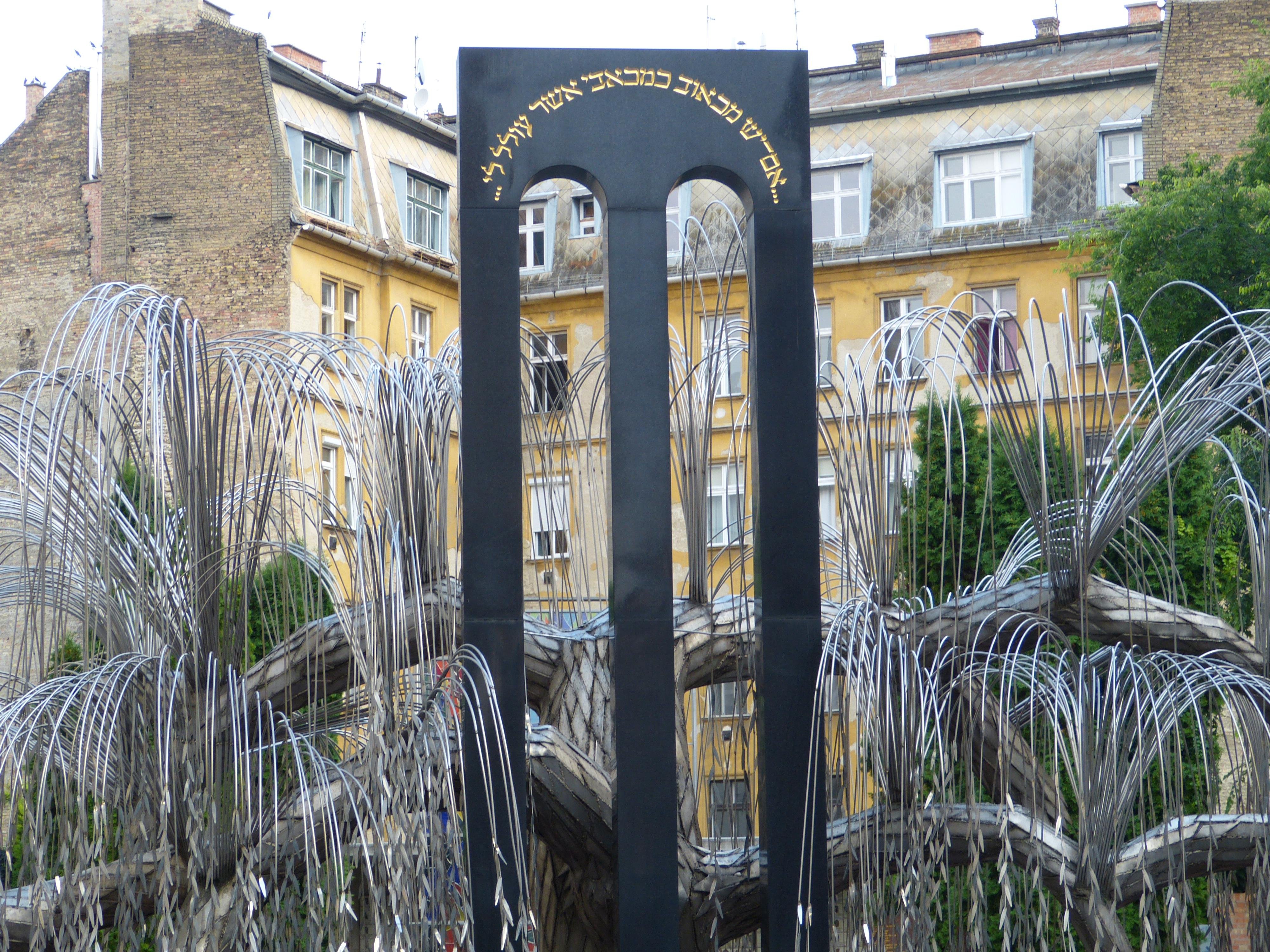
This space honors the Swedish diplomat who saved thousands of lives during the Holocaust.
Located on the site of Theodor Herzl's birthplace, this museum houses an extensive collection of Judaica.
Built to honor Jewish soldiers who died in World War I, this structure serves as a connecting building.
A solemn area containing the graves of those who perished in the Jewish Ghetto during the winter of 1944–1945.
They complement each other, though most visitors find the expansive synagogue complex more immersive for history while the Kazinczy Street site offers a more intimate look at Orthodox traditions; a budapest jewish quarter walking tour often bridges these two major landmarks.
| Feature | Top pick Dohány Street Complex | Kazinczy Street Synagogue |
|---|---|---|
Architectural Style |
Moorish Revival grandeur | Art Nouveau austerity |
Primary Experience Type |
Full museum and memorial complex | Active Orthodox place of worship |
Depth of Historical Insight |
Extensive multi-generational history | Focus on local Orthodox community |
Time Commitment |
2–3 hours for full site | 45–60 minutes for interior visit |
Crowd Levels |
High tourist volume daily | Moderate with peak Sabbath cycles |
| See tickets → |
Verdict: Choose the Dohány Street site for a comprehensive introduction to regional heritage, or opt for the Kazinczy Street experience to appreciate the architectural nuance of budapest jewish quarter walking tour tours and their focus on local culture via specialized budapest jewish quarter walking tour tickets.
Choose your ticket, select your date, and reserve in under two minutes. Secure checkout handled by our verified partner.
Instant confirmation by email, with a mobile voucher you can save offline. No printing, no queuing at a collection desk.
Arrive at the entrance, show your voucher on your phone, and walk in. Most tickets include priority or skip-the-line access.
Practical details for your visit straight from our verified partners — hours, access, rules, and how to get there.
Dohány utca 2
Main gate for Budapest Jewish Quarter walking tour arrivals
Take Metro Line M2 to Astoria station
Request drop-off at Dohány utca 2
Visitors must dress modestly when entering the Dohány Street Synagogue. Men are required to cover their heads with a kippah provided at the entrance.
Security screening is mandatory for all guests participating in a budapest jewish quarter walking tour. Large backpacks and luggage are prohibited inside the complex.
Photography is permitted for personal use within the Dohány Street Synagogue grounds. Please remain respectful of ongoing religious services and other visitors.
The Dohány Street Synagogue offers accessible entrances for mobility-impaired visitors. Most of the Budapest Jewish Quarter walking tour route involves flat city sidewalks.
Mobile phones must be silenced while inside the Dohány Street Synagogue. Please refrain from making calls during the guided portion of your Budapest Jewish Quarter walking tour.
Families are welcome, though the serious nature of the memorial sites should be explained to children beforehand. The Dohány Street Synagogue is a functioning religious site.
Food and beverages are not permitted inside the synagogue or the museum. Many kosher cafes are located nearby as part of a typical budapest jewish quarter walking tour.
Pets are strictly prohibited within the synagogue complex. Only registered service animals are permitted for guests requiring assistance.
The 14,500 HUF entrance fee covers all parts of the Dohány Street Synagogue complex. Guided tours are included in this price to provide context for your Budapest Jewish Quarter walking tour.
Dohány utca 2
Main gate for Budapest Jewish Quarter walking tour arrivals
Get directionsBest time to go, insider tips, nearby landmarks, and the cancellation fine print — flip through to skim what matters to you.
How crowds, weather, and events shift across the year.
High temperatures require light clothing and early arrival to avoid midday heat.
Mild weather is ideal for a Budapest Jewish Quarter walking tour with comfortable walking conditions.
Fewer crowds and pleasant temperatures make this an excellent time for visiting Jewish Quarter landmarks.
Indoor museum visits are comfortable, but outdoor walking portions require warm layers.
Small details that turn a good visit into a great one.
Arrive between 10:00–15:00 to minimize wait times at the gate.
Non-bookable sights within a short walk — free to visit, easy to pair.
Neoclassical building showcasing Hungarian history.
Central junction point for local transit lines.
Scenic route connecting major historical city districts.
Flexible, no hidden fees.
The entrance fee of 14,500 HUF is non-refundable upon purchase. Please ensure your travel dates align with the Dohány Street Synagogue schedule before finalizing your budapest jewish quarter walking tour.
Hand-picked options within walking distance — pick a district for vibe, or a specific hotel for convenience.
Located in a historic building within the district.
Modern design in the heart of the city.
Variety of short-term rentals near synagogue.
The Dohány Street Synagogue, completed in 1859, holds 3,000 worshippers beneath Moorish Revival domes striped in red brick and cream stone — the largest synagogue in Europe and the second largest in the world. Architect Ludwig Förster designed the twin octagonal towers to echo Christian basilicas, a deliberate gesture toward the Reform movement's effort to weave Jewish tradition into the fabric of Habsburg Budapest. The interior merges gilded arabesque arches with a rose window borrowed from Gothic cathedrals, while a pipe organ — rare in synagogues — fills the nave with sound during concerts that continue to this day. The Jewish Quarter, or Erzsébetváros, radiates outward from Dohány utca into a grid of courtyards, kosher bakeries, and former tenement blocks that once housed 200,000 Jews, a quarter of the city's population before 1944. The neighborhood's streetscape still carries the contours of that vanished world: Hebrew inscriptions above doorways, the scars of wartime shelling, and the iron fence of the Raoul Wallenberg Memorial Park, where 2,000 victims of the Budapest Ghetto lie buried in mass graves beneath a sculpture of weeping willow leaves, each engraved with a name. The Holocaust Memorial Center, opened in 2004, anchors the district's eastern edge with a tilted glass facade that reflects the Páva Street synagogue, a site of deportation transformed into a repository of testimony. Today the Jewish Quarter serves as both living neighborhood and archaeological site. Ruin bars occupy bombed-out buildings left hollow by the siege of 1945, their graffiti-covered walls and mismatched furniture a studied contrast to the restored grandeur of the Rumbach Street and Kazinczy Street synagogues. The district's mix of memory and commerce — Holocaust memorials beside specialty book shops, monuments flanked by tour groups — captures the paradox of heritage tourism in a place where history is not backdrop but ground. A Budapest Jewish Quarter walking tour threads these layers together, tracing the arc from 19th-century emancipation through destruction and postwar revival, all within a 20-minute walk of the Danube's eastern bank.
"The interior merges gilded arabesque arches with a rose window borrowed from Gothic cathedrals."
A step-by-step walkthrough of the visit — what you'll see, how long each stage takes, and the details that matter.
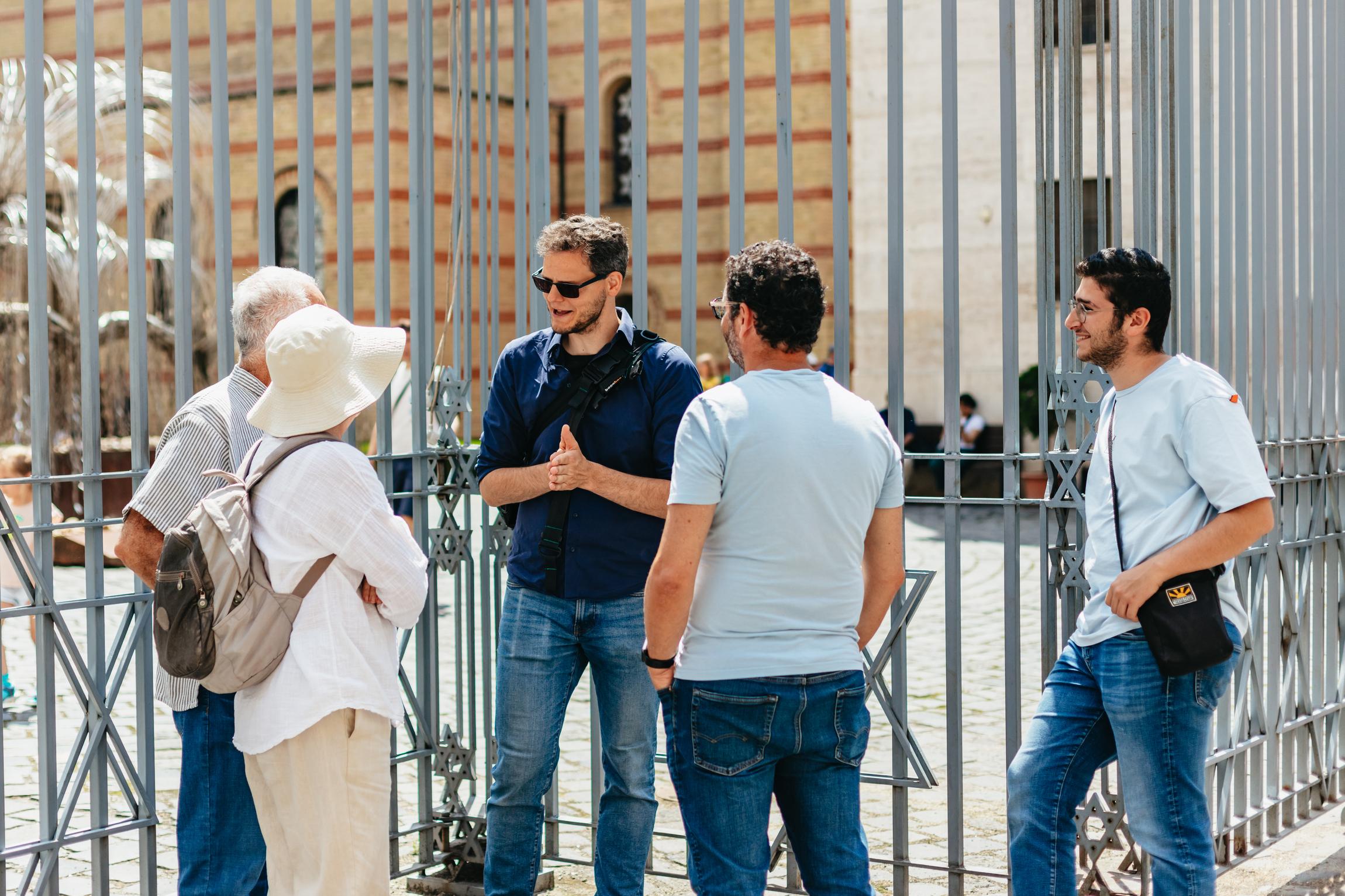
You meet your guide at the wrought-iron gates of the Dohány Street Synagogue, where the twin towers rise 43 meters above the tram lines of the Grand Boulevard. Inside, you pass beneath the women's gallery into the central nave, its vaulted ceiling painted in geometric patterns of ochre and teal, light streaming through stained glass that survived the 1944 air raids. Your guide points to the organ loft and recounts Liszt and Saint-Saëns performing here in the decades after the building's consecration. From the sanctuary you walk into the adjacent Jewish Museum, where manuscripts, Torah scrolls, and Judaica collections trace the arc of Hungarian Jewish life from medieval Buda to the salons of the Austro-Hungarian era. Behind the museum lies the cemetery, enclosed by brick walls and shaded by plane trees, where headstones lean against one another in rows too dense for the space — a burial ground created during the 1944 ghetto when deportations made transport to the city's outlying cemeteries impossible. Leaving the synagogue complex, you cross Wesselényi utca into the heart of the Seventh District, where your guide narrates the ghetto's boundaries, marked today only by memorial plaques. You pause at the Tree of Life, its metal leaves catching the afternoon sun, before walking north past kosher wine shops and the Gozsdu Courtyard, a passageway of cafés and boutiques that hums with foot traffic — a neighborhood rebuilt on the scaffolding of loss.
The synagogue is open 10:00–18:00 Sunday through Thursday, 10:00–16:00 on Friday, and is closed on Saturday.
Yes, tickets can be purchased at the Dohány utca 2 location, though booking ahead for your Budapest Jewish Quarter walking tour is recommended.
Yes, visitors should dress modestly and men must wear a kippah provided at the entrance.
The entrance fee is 14,500 HUF, which includes access to the Dohány Street Synagogue, museum, cemetery, and a guided tour.
Yes, families are welcome, but the site serves as a memorial and requires respectful behavior.
Yes, the Dohány Street Synagogue complex provides accessible pathways for visitors.
Photography is allowed, provided you respect the sanctity of the synagogue during your Budapest Jewish Quarter walking tour.
We suggest arriving between 10:00–15:00 to avoid end-of-day crowds and ensure full tour access.
No, there are no locker facilities on-site, so please avoid bringing large bags to your Budapest Jewish Quarter walking tour.